Category: Blog

Your blog category

  • Self Employed Jobs Oxford – Join Our Team

    Self Employed Jobs Oxford – Join Our Team

    Oxford Driving Instructor Job Vacancies

    What You Need to Know About Becoming a Driving Instructor

    If you are attracted by the idea of working for yourself and you love driving, working as a driving instructor is the next natural progression. Working as a driving instructor in Oxford can be immensely satisfying. You get the opportunity to see your students develop, with the outcome of achieving a goal which can really help improve their quality of life. Some people need to drive for their work or other commitments and the chance to support them with this can offer a lot of job satisfaction. The job of a driving instructor can be challenging and demanding, but the rewards are well worth it.

    Is this the right move?

    Oxford Driving Instructor Jobs

    If you are just starting to contemplate the idea of becoming an Oxford driving instructor, you probably have a lot of questions and you may be wondering if it’s right for you. If you are at the stage in your life were you really want a healthier work/life balance, this job can offer it. As a driving instructor, you can decide on the hours you work, and the students will work around your availability.

    You have the flexibility to undertake your driving lessons for a full, continuous day and take the next day off if you want, it’s completely up to you.

    You will need to have a passion for driving, after all, you’ll be spending your days driving or teaching. Driving instructors need to have a lot of patience and understanding to get the most from their students. The last thing we want is to put students off or make them feel uncomfortable, so if you really lack in patience, this is probably not the right job for you.

    What happens next?

    Do you still want to become a driving instructor? Good! We are glad you’ve decided to embark on this journey but there’s some steps you need to take before you can get started. It is imperative that you first register with the Driving and Vehicle Standards Agency (DVSA.) You need to be over 21 and have had a driving license for more than three years with no convictions. A DBS (Disclosure and Barring Service) check will also be required. You will then undertake the ADI exam, which is made up of three different stages; theory-based test, driving ability test and instructional ability test. When you have passed these tests, you’ll be ready to join an established company and get started on helping students achieve success.

    Why choose Oxford Local Driving Academy?

    There are many reasons why you should choose us to start your journey as a driving instructor. We have an excellent reputation amongst our clients, and we were even awarded ‘the best driving school in Oxford.’ We have a booking system which allows you to set your own hours and there are no hidden charges. We always have students looking for driving lessons in Oxford, so you will never be left waiting for work.

    If you want to embark on a career as a driving instructor, you won’t make a better choice than joining us!

  • What to Expect During Your Driving Test, UK

    What to Expect During Your Driving Test, UK

    What to expect during your driving test UK – Minors and Majors – Faults

    You’ve had all your lessons, you’ve passed your theory test and now you’re ready to take your driving test; but what you do when you arrive at the test centre? And how can you ensure that you have the best chance of passing your test?

    Minor and major driving faults during driving test UK

    During your driving test the examiner will use a driving test report form, also known as a DL25 to mark down any faults that you make during your test. The driving faults are classed in three categories:

    • Minor (a fault which is less serious and doesn’t impose any danger to other road users)
    • Serious (a fault which is potentially could be dangerous)
    • Dangerous (a fault which involve danger to other road users)

    How many minor and major faults can you have on driving test UK – Fail / Pass

    You are allowed up to 15 minor faults during your test, however committing any serious or dangerous fault will result in failing your test. Also committing more than 3 faults from one category count as a serious fault.

    The first question you may have is what happens when you get to the test centre? Once you’ve met the examiner he/she will check you’re:

    • Provisional licence including the counterpart.
    • Ask you to sign the declaration form (DL25 FORM) to ensure you are UK resident, and the vehicle is ensured.
    • Give you an eyesight test which involves reading the number plate of a vehicle from a distance of 20m.
    • Will ask you 2 vehicle safety questions also known as “show me tell me questions”.

    Then you will be asked to sit in the driving seat and make yourself comfortable. Your practical test will last between 38 to 40 minutes. You will be driving through various routes including 10 minutes independent driving. You will be also asked to carry out a manoeuvre, possibly control stop. (Emergency stop)

    The manoeuvres you may be asked to perform during driving test UK

    The manoeuvres that you may be asked to perform will include:

    • Reverse parking
    • A turn in the road
    • reversing round a corner
    • Parallel parking

    When the examiner asks you to perform a manoeuvre he will show you where to do it and when. For example, he may ask you to drive to a certain location on the road and then do a full turn. He will give you an adequate amount of time to perform the manoeuvre, so take the time to plan what you are going to do and ensure that you carry out all the necessary safety checks.

    When your examiner is assessing your manoeuvre they will mark down a fault if you do not have full control of the vehicle, do not carry out the necessary safety checks or do not respond to other vehicles or pedestrians. You will not know which manoeuvres the examiner will ask you to do so it is important that you prepare by ensuring that you can do all of them successfully.

    Throughout the test, the examiner will check that you move off safely and that you are in control of the car by making sure that you use the mirrors correctly, check your blind spots, are aware of other road users and show that you can coordinate the use of the cars main controls. At the end of your test your examiner will add up these faults and this will determine whether you have passed or failed.

    Areas marked and assessed during the practical driving test UK:

    1a) Eyesight – There are no minors that can be incurred here but you must be able to read another car’s number plate. If you fail this, unfortunately it is an instant fail.  Check on your first lesson whether you will need glasses when taking your driving lessons.

    1b) Highway Code – Before embarking on your driving test you will have completed your theory test where you will have been a series of questions on the Highway Code.  Although if you passed your theory test you will not be asked any further questions, you should still be fully aware of this code.

    2) Controlled stop – Not everyone will be asked to carry out an emergency stop but if you do you need to follow the commands of the examiner and maintain control of the car at all times.  In essence avoid the car skidding out of control.

    3-5) Reverse – You will be asked to demonstrate that you can control your car by safely reversing to either the left, the right or into a parking bay.  It is important to be observant at all times.

    6) Turn in the road – This needs to be carried out slowly as many serious and dangerous faults can be made here.  Not having control of the steering wheel can mean that you over steer and end up on the curb.  Observation is key in ensuring that you are fully aware of other vehicles around you and what they are doing while you are manoeuvring.

    7) Vehicle Checks – This is commonly known as the show me, tell me section of the test.  Failure to answer one of the questions will result in a minor.

    8-10) Taxi Manoeuvre, Taxi Wheelchair, Vehicle and Trailer Combinations – Not applicable for the standard driving test.

    11) Precautions – Ensure that you are seated in the correct position to take your driving test.  If you have taken a lesson prior to your test you will already have your mirrors and driving seat correctly adjusted.

    12) Control – Avoid harsh steering and coasting (having the clutch depressed for long periods).

    13) Move off – Demonstrate that you are able to move away from standstill smoothly and safely at all times.  This is also applicable when moving off from a gradient in the road.

    14) Use of mirrors – It is very common for minors to occur when you fail to check your mirrors when changing direction and speed.  Ensure you check your mirrors as often as possible even if you feel there is not a need to.

    15) Signals – The purpose of this section is to let people know what your intentions are.  Always signal in good time allowing other drivers time to respond and once you have carried out your manoeuvre you need to put an end to the signal.

    16) Clearance to Obstructions – Always allow plenty of room between you and other cars and potential obstructions.  Always be fully prepared to stop if you see a young child run out or someone open their car door without giving you any prior warning.

    17) Responding to signals – You will need to demonstrate that you can react quickly to all road markings and traffic signal.  This includes reacting to traffic lights and obeying signals by traffic wardens, police and school crossings.  In addition to this keep an eye out for signals from other road users and always be ready to act.

    18) Use of speed – Act with care and always driving in accordance to the road conditions such as ice, fog and rain.  Bear in mind that as a new driver you would have your driving license withdrawn if you are caught speeding and exceed six points or more in the first two years of driving.

    19) Following distance – Remember to keep a safe distance from you and the car in front.  If the roads are wet or icy the distances need to be increased.  You need enough space to act if the car in front was to brake without prior warning.

    20) Maintain progress – You need to show that can drive confidently at the appropriate speed and maintain this.  If approaching hazards you must do so at a safe and controlled speed.  Driving slow can also cause dangers just like driving fast can.

    21) Junctions – The ability to judge your speed when approaching a junction and this includes roundabouts and safely stop the car in plenty of time.

    22) Judgement – Using your judgement overtake cars if there is a need to always allowing plenty of room.  Give extra room for cyclists as they can sway without notice.

    23) Positioning – Try to avoid straddling over two lines and position your car on the road sensibly, keeping to the left where possible.  If there are parked cars that you need to overtake, take the correct position quickly and safely.

    24) Pedestrian Crossings – You will need to demonstrate that you are fully aware of the many types of pedestrian crossing and show consideration towards pedestrians at all times.  If you see a crossing slow down and stop if there are pedestrians visible.

    25) Position – When asked to bring your car to a standstill, find a safe and convenient place to bring the car to a safe standstill position.  Try to avoid obstructing the road and potentially causing a danger to other road users.

    26) Awareness – Be fully aware of other road users at all times and their actions.  You need to plan ahead and try and predict how the other car users are going to react.  Also take particular attention to vulnerable road users including cyclists, horse riders and pedestrians.

    27) Ancillary Controls – Even if you don’t use all the controls in the car, you need to be fully aware of how they all work and when they are needed.  These can include windscreen wipers, heat controls and indicators.  You need to demonstrate that you can use these controls without the need to look down looking for them.

    28) Eco Safe Driving – If applicable

    29) Health Declaration – If you have any health conditions that have changed since you originally applied for your license, then you will need to make the test centre aware of these before taking your driving test.

    30) Residence – You can only take a UK driving test if you originate from the UK or European Economic Area or have li

    ved in

    the country for at least 185 days in the last twelve months.  Remember you will be asked to provide proof.

    Book Driving Lessons with Top Driving School UK

    Get in touch today for intensive driving lessons, regular driving lessons, refresher or automatic driving courses with an established, trustworthy, DSA approved driving school.

  • Driving Licence DVLA Online Service – View and Share App

    Driving Licence DVLA Online Service – View and Share App

    DVLA Mobile Phone App – Driving Licence View and Share

    The DVLA developed a way to use their View and Share driving licence online services using a QR code that is stored in a mobile phone.

    This gives customers greater choice in how they access DVLA services and in a way that suits them. Most people have their phone to hand at all times and this is a convenient, easy and secure way for drivers to confirm their licence details when they need to.

    Features and Benefits of the DVLA View and Share App

    Taken from the original DVLA blog post. The existing View or share your driving licence information service allows drivers to share their licence information with third parties – such as employers and car hire companies – by generating a unique, single-use check code. The code lasts for 21 days and third parties can redeem it on GOV.UK using Check someone’s driving licence information.

    These services have proved a hit with drivers and stakeholders, with 22 million individual share codes generated since they were introduced 3 years ago. Even though these are popular services, users told us they wanted greater flexibility by using the technology in their mobile phones.

    How it works

    The new service works by generating a QR code which can be easily scanned by a third party to see the driver’s licence information.  This includes driving categories and entitlements, and any restrictions, endorsements or disqualifications they may have. The same rules apply every time you generate a check code via GOV.UK – you still need to show your physical driving licence on request.

    As well as individual motorists, our customers include the police, central and local government, the vehicle hire industry and employers. We want them to be able to choose how and when they access our services and consume our data. The service is another great example of this.

    View or share your driving licence information

    You can use this service to:

    • view your driving record, for example vehicles you can drive
    • check your penalty points or disqualifications
    • create a licence ‘check code’ to share your driving record with someone, for example a car hire company

    The check code will be valid for 21 days.

    You’ll need:

  • Intensive Driving Lessons Oxford Block Booking Discounts 2020

    Intensive Driving Lessons Oxford Block Booking Discounts 2020

    Intensive Driving Lessons Oxford 6 Hours Day

    How long did it take you to pass your driving test? For most people the amount of time they take learning to drive will be measured in months. They might have a lesson or so every week, slowly building up the skills and knowledge they need to finally take and pass their driving test. For some people, such an approach takes too much time. These people will want to pass their driving test as soon as possible.

    Driving Lessons in a Week – Block Booking – Automatic and Manual

    In these situations a week of intesntive driving lessons are often the perfect solution. Rather than having an hourly lesson every week, you can spend up to 6 hours a day learning over continuous days. Before the week is up you’ll be in a position to pass your test with flying colours.

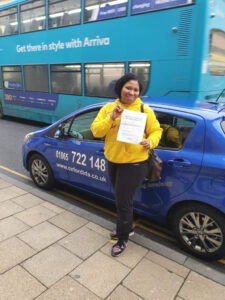
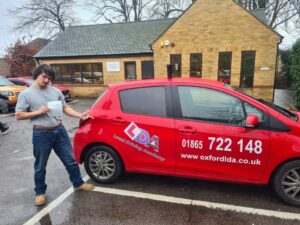
    Hundreds of students have passed their test in Oxford and we have driving instructors in Wantage, Abingdon, Didcot, Bicester and surrounding villages with both manual and automatic cars. View our Instagram feed!

    Pass Your Test Quickly for Work or a New Job in 2020

    Some people just prefer to get learning to drive out of the way or find their learning style is best suited to intensive training. Other people will find it impossible to have weekly lessons because of commitments and might try to learn during their holidays. Others may need to learn to drive quickly for work purposes.

    Save Money – Cheaper Driving Lessons with Block Booking Intensive Discounts

    As well as saving time you could also save money. While lessons are priced at the same rate you could end up cutting costs because you’ll be spending more time learning new skills rather than refreshing the memory by going over old ground. Find our up to date prices on our How Much Do Driving Lessons in Oxford Cost

    Call now on 01865 722 148 or send a message via the Contact Form online and schedule in your driving lessons today.

    The advantages of an intensive course are clear for many people to see, but are there disadvantages? Apart from perhaps getting sick of the sight of some of Oxford’s roads there aren’t any. If you’ve got the commitment necessary you can pass your test in a matter of days or weeks, not months.

  • Professional Driving Lessons vs Mum and Dad Tuition

    Professional Driving Lessons vs Mum and Dad Tuition

    Professional Driving Lessons vs Mum and Dad Tuition

    As you approach your 17th birthday, applying for a provisional driving license is one of the things you’ll inevitably do. Forget about turning 18 or 21 – the freedom of the world is offered to you with a key to a car once you turn 17. But first you’ll have to pass that all-important driving test.

    Dual Controls for Safety and Qualified Oxford Driving Instructors

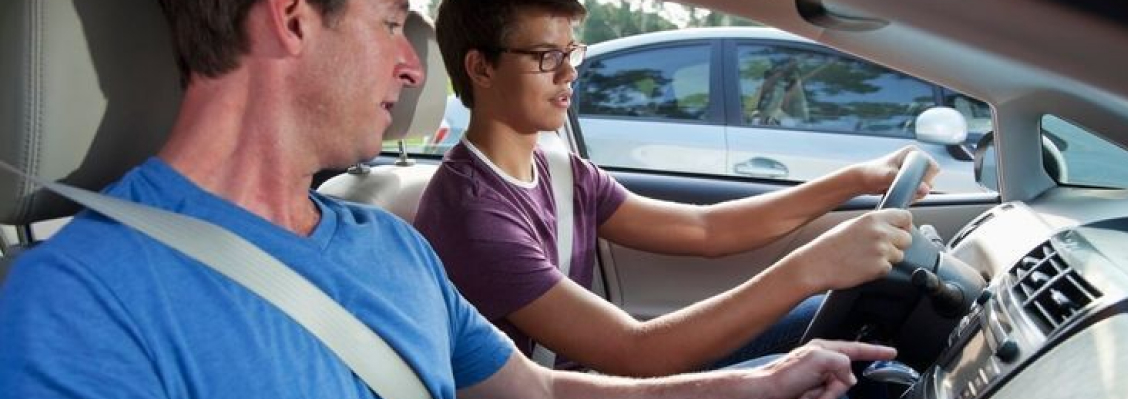
    Having from a professional often makes a learner feel more confident to begin with. If you’ve ever seen your dad give in to road rage or disobey a traffic sign you might not feel quite so confident that they can teach you to drive properly. Furthermore your instructor’s car will have dual controls (an extra clutch and brake pedal on the passenger side) that makes learning to drive much safer. So it’s best to leave it to the professionals – that way you’ll be driving without your L-plates in no time.

    Mum or dad might have offered to teach you to drive if they’re particularly brave and don’t mind potentially feeling the wrath of Oxford’s commuters. However, there’s no doubt that a qualified driving instructor will do a much better job of getting you up and running, and ready to meet the examiner’s requirements on test day.

    After all, someone with a track record of teaching people to drive and pass their test will be more likely to turn your green license into a pink one. This is partly because the requirements of a driving test can change frequently, putting instructors in the best position to make sure you’re driving the way examiners want you to drive.

  • Theory Test Tips – Car Stopping Distances UK

    Theory Test Tips – Car Stopping Distances UK

    Stopping Distances and the Theory Test, UK

    Are you preparing for your UK Driving Theory Test but keep getting caught out by the questions on stopping distances, braking distances and thinking distances?  If so, check out the information below which should help you to explain the differences and help you remember the correct stopping distances so you’re not left confused and panicking on the day of your Theory Test!

    Get in touch today for intensive driving lesson courses, manual or automatic driving lessons with an established, trustworthy, DSA approved driving academy. Call now on 01865 722 148 or send a message via the Contact Form online and schedule in your driving lessons.

    So what are the differences between the Thinking Distance, Braking Distance and Stopping Distance?

    Thinking Distance

    The Thinking Distance is the time it takes for you to activate your brakes, and the distance you have travelled before they start to affect the speed of the car.

    TIP: Thinking Distance is appropriately 1 foot for every mph you are travelling at. So for example, if you are travelling at 30mph then your thinking distance is approximately 30 feet.

    Braking Distance

    Braking Distance is the distance your car travels after you have applied the brakes until your vehicle comes to a stop. The faster you are travelling, the more momentum you have and the braking distance will, therefore, increase accordingly.

    Stopping Distance

    Stopping Distance is the total distance you travel before you hit the brakes plus the distance you travel while the brakes slow you down. Thinking + Braking Distance = Overall Stopping Distance.  

    How to remember Stopping Distances by Speed

    TIP: Here is a great way to remember the overall stopping distances. Starting from 20mph you simply multiply the speed by intervals of 0.5, beginning with 2, for example, 2, 2.5, 3, 3.5 etc as follows:

    20mph x 2 = 40 feet ((12 meters) or 3 car lengths)
    30 mph x 2.5 = 75 feet ((23 meters) or 6 car lengths)
    40 mph x 3 = 120 feet ((36.5 meters) or 9 car lengths)
    50 mph x 3.5 = 175 feet ((53 meters) or 13 car lengths)
    60 mph x 4 = 240 feet ((73 meters) or 18 car lengths)
    70 mph x 4.5 = 315 feet ((96 meters) or 24 car lengths)

    The above calculations are a simple way to help you remember the correct stopping distances, but please be aware that these are approximate.  The overall stopping distance is really the only safe separation gap, anything less than this can be considered a risk.

    Stopping distance at 20mph = 40 feet (12 meters)

    Stopping distance at 30mph = 75 feet ( 23 meters)

    Stopping distance at 40mph = 24- feet (73 meters)

    Stopping distance at 50mph = 175 feet (53 meters)

    Stopping distance at 60mph = 240 feet (73 meters)

    Stopping distance at 70mph = 315 feet (96 meters)

    The Highway Code – Stopping Distances

    The distances shown below are a general guide.  The distance will depend on your attention (thinking distance), the road surface, the weather conditions and the condition of your vehicle at the time.

    What affects overall car stopping distances? – ( What will affect your vehicle’s stopping distance? )
    You must always remember that the overall stopping distance of your vehicle depend greatly on a considerable number of factors including:

    • How fast you are travelling
    • Whether you are on a level road, or a hill going up or down, and the steepness of that hill.
    • Weather, is it good and dry, or is it wet or icy (stopping distance may increase upto 10 times in icy conditions)
    • Tyres, are they good tyres and properly inflated, or worn or badly inflated
    • Brakes, are they working well, are they stopping you in a straight line.
    • Your ability as a driver, are you ill, tired, on medication, have drunk alcohol, are distracted, all of these can affect your reactions when applying brakes.

    So these factors will affect your vehicle’s overall stopping distance.

    Separation Distances

    Separation distances are safety margins or empty road between you and the vehicle in front. Separation distances are essential to allow you time to see and react appropriately to any potential or developing hazard.

    How much can stopping distance increase in icy conditions?

    Stopping distance of your vehicle  may increase upto 10 times in icy conditions. Reducing speed and allowing more distance between the vehicles is important in icy conditions.

    Tips to ensure you don’t get caught out in the Theory Test UK

    Make sure you read every question thoroughly. One very common occurrence is that test candidates do not read the question properly and as a result mark the incorrect answer when being asked about stopping or braking distances. Always make sure that you read every driving Theory Test question at least twice on the day of your test, but most importantly TAKE YOUR TIME! You’ll not score additional points for finishing your test early, so make good use of the allocated time you have to read every question and possible answer thoroughly.

    And finally…

    Check out the Learning To Drive Apps we recommend.
  • Driving Lesson Tips – Oxford Driving Instructor UK

    Driving Lesson Tips – Oxford Driving Instructor UK

    Oxford Driving Instructor Lesson Tips

    When you are learning to drive in the Oxford (UK) area, there are a huge amount of factors to consider such as the cost of driving lessons, the time frame, the reputation of the company you use, and the style of instructor that you require. As part of the learning process there is an immense amount of information to digest. Check out today’s Driving Lesson Prices in Oxford here.

    Driving Lesson Tips UK: Highway Code and Driving Therory Test UK

    For instance you will need to know by heart many sections of the Highway Code for the theory test. In addition there are many key pieces of information that you have to take on board in order to ensure that you are a safe, confident driver such as the Stopping Distances on your Theory Test.

    Driving Lesson Tips UK: Listen To Your Driving Instructor

    Of all the advice that you will be given while learning, there is one notable rule which will make the whole process goes as smoothly as is possible. That is; ‘Listen to your instructor’. The most common problem that driving instructors have with their pupils is that the learners sometimes think they know better.

    Strange as it may seem, many people pay an instructor to teach them how to drive and then ignore some of the most basic instructions that they are given. This kind can compromise the whole learning process and result in making it impossible to pass a test.

    The problem is even worse for people who have failed the test on at least one occasion. They often seem even more determined to do things their own way, which has already been proven wrong! Doing as the instructor tells you is a simple, but very effective rule, and once you abide by it then all other parts of the learning process will fall neatly in to place.

    2020 Driving Test Pass Rate – See Our 2019 Students UK

  • Free NHS and Keyworkers Driving Lessons in Oxford

    Free NHS and Keyworkers Driving Lessons in Oxford

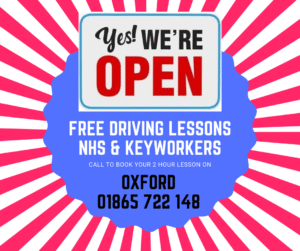
    FREE 2 Hours Driving Lessons for Key workers and NHS

    Oxford LDA, your experienced and award winning Local Driving Academy who offer cheap driving lessons in Oxford,  would like to say a big thank you to all key workers for their contribution to Oxford during the recent lock-down.

    What You can Expect from a driving lesson with Oxford LDA

    It doesn’t matter if you have had driving lessons in Oxford before, or if you are a complete newbie, you can still take advantage of our free two hour lessons. Whether you are young or old, prefer automatic driving lessons in Oxford or have had intensive driving lessons in Oxford in the past, if you are a key-worker then our small gesture of thanks is yours to take.

    All our driving lessons in Oxford are offered with a professional and experienced instructor and don’t worry if you’re nervous or scared, its our job to put you at ease and give you the confidence to drive and pass your test.

    Thank you all once again, for your bravery, your professionalism and the selflessness you’ve all shown and we look forward to giving you your free driving lessons in the near future.

    N.B The two hours free will be applied when you book ten hours so you will receive twelve hours for the price of ten. The ten hours will be charged at our usual hourly rate and the offer is valid until December 2020. Only one set of free two hour lessons per key-worker. Terms and Conditions apply – Proof of residency  or work ID will be required.

    Lock-down Bravery

    To say things have been difficult for everyone over the past few months feels a little bit of an understatement. But some people have literally placed their lives on the line and continued working throughout lock-down to ensure that we have all been able to eat, make essential travel and receive any necessary healthcare. Thousands of workers have shown immense bravery and risked their own lives as they continued to drive our buses and trains, stacked shelves in supermarkets or ensured our elderly loved ones were still given daily personal care and support.  It’s hard to imagine the difficulties they must’ve faced as they attended work every day, knowing their own health was at risk. Many of these workers only earn the minimum wage too, which shows these key-workers didn’t go to work every day for simple financial gain, but because they felt a sense of duty to us all. This is just one of the many reasons that Oxford LDA would like to show a small gesture of thanks to all key-workers and offer all of them in Oxford two hours of driving lessons for free.

    The NHS and Healthcare Workers

    Working as a doctor, nurse or healthcare assistant is a massive challenge in itself given the struggles faced on a normal daily basis, but imagine dealing with hundreds of people dying, people that you were unable to help because there is currently no cure or vaccine for Covid-19. Many healthcare workers have expressed the emotional turmoil they faced when all they could do was to make sure people didn’t die alone and to keep them as comfortable as possible. These professionals have had to work long hours during the pandemic and cope with nationwide shortages of PPE and other vital equipment. This humbles us all at Oxford LDA and as a big thank you from all of our team, we would like to offer discounted driving lessons for NHS and healthcare workers in Oxford too.

    NHS Discounts and Ongoing Driving Lessons

    FREE NHS + KEYWORKER Driving Lessons in Oxford. You will receive 12 hours for the price of 10. Only one set of free two hour lessons per key-worker. Terms and Conditions apply – Proof of residency or work ID will be required. The offer is valid until December 2020.

    Clock to read our 2020 block booking NHS discount prices

  • Bicester Driving Lessons

    Bicester Driving Lessons

    Driving Lessons in Bicester – Automatic and Manual Instructors

    Whether you want to take regular driving lessons in Bicester in a manual car with gears or you would prefer an automatic driving school in Bicester, we have you covered! Call now on 01865 722 148 or send a message via the Contact Form to send a message or even book online.

    Our pass rate is so high because of our approach to learning to drive. This is not like going around town with a parent, this is a proper professional course where you get to understand exactly what the driving examiner expects to see from you on your driving test.

    So first of all in your first lesson we are going to go through with you what you need to be able to achieve to pass your driving test and what it takes to be a safe driver. It is a simple formula that you will apply to every driving lesson and every skill you will learn when in the car.

    Didcot Automatic Driving Lessons/ Instructor and Manual Dual Control Cars

    Automatic Driving Lessons in Bicester. You need to demonstrate you are a safe driver you need a driving instructor in Bicester who is going to show you that, so let’s begin right now.
    The examiner doesn’t see safe as keeping within the speed limit, not jumping red lights etc. They are apart of what being a safe driver is, but doesn’t define being a safe driver.

    Where you need to be is real clear. First up is all about your attitude to driving, do you want to be safe and are you trying your best? Then you have got to be in control of your car at all times. Also you must be able to spot hazards, avoid them, and adhere to the Highway Code.

    That makes perfect sense really, doesn’t it?  So now imagine using that strategy on everything you learn, from moving off, to a reverse park and from turning right at a set of crossroads, to switching lanes on a roundabout. They are all different skills and by applying our strategy you will complete them perfectly.

    Service Areas Oxfordshire:

    Bicester, Abingdon, Oxford, Banbury, Didcot, Kidlington, Thame, Wallingford, Wantage , Watlington, Witney, Woodstock.

  • Driving Lessons in Didcot – Driving Instructor

    Driving Lessons in Didcot – Driving Instructor

    Driving Lessons in Didcot with Qualified Instructors – Automatic and Manual

    Our driving instructors in Didcot have a really good record of getting first time passes because of how we teach you from day one. Call now on 01865 722 148 or send a message via the Contact Form online and even book your lessons online in under 60 seconds!

    Assuming you are just like nearly all learner drivers you have a bit of a wishlist when it comes to taking driving lessons in Didcot, You want a really nice driving school in Didcot, where you are not made to take more lessons than you need and you want to be able to pass your driving test on the first attempt – sound about right?

    What you are going to get is a framework of lessons based on safe driving and what the examiner is looking for.
    if we asked you to define safe driving you may say something like, not speeding, not crashing, not going through red lights, and while that is partially right it doesn’t’ fully answer the questions.

    Automatic and Manual Driving Lessons in Didcot, UK

    Whether you are learning in our manual car or taking automatic driving lessons in Didcot we are going to help you use the following success formula.

    • From your very first lesson you are going to be taught to drive from the point of the view of the driving examiner.
    • We are going to use the system of “no questions asked” this is where you are 100% able to analyse your own driving and make corrections without needing your instructor.
    • You will go into your driving test have passed a mock test.
    • You will go into your driving test already being safe, confident and able to drive on your own.

    Whether you join us by taking automatic driving lessons in Didcot or decide to drive a manual car, before you go to your driving test you will always be in control of the car, driving with a safe attitude, adhering to the Highway Code and spotting hazards.

    Call Us for Driving Lessons in Didcot – Automatic and Manual

    All you need to do is pick up the phone and give us a call today for all you driving learning needs in Didcot.\

    Service Areas Oxfordshire:

    Didcot, Abingdon , Oxford, Banbury, Bicester, Kidlington, Thame, Wallingford, Wantage , Watlington, Witney, Woodstock.